
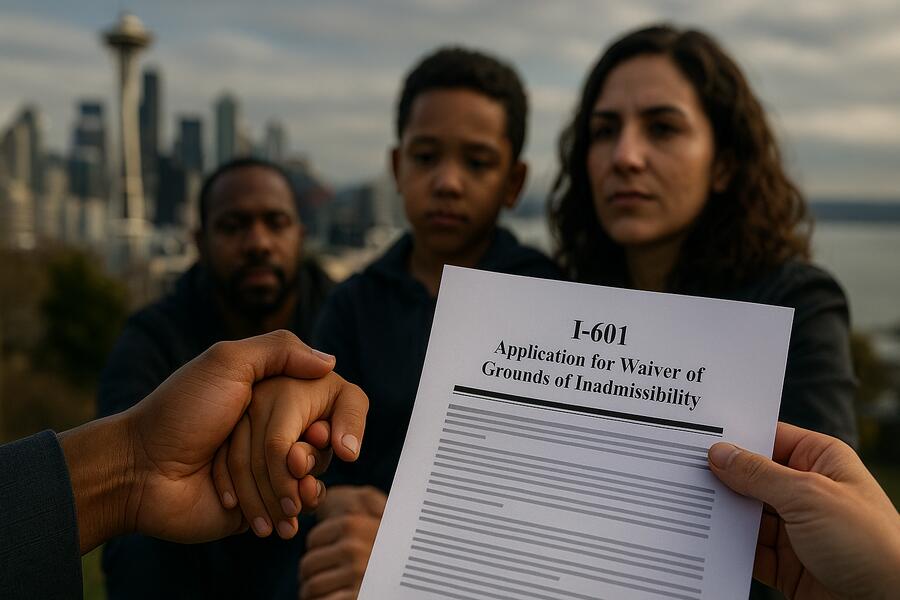
Navigating the complexities of U.S. immigration law can be challenging, especially when facing a finding of inadmissibility. For many individuals hoping to enter or remain in the United States, an I-601 waiver offers a critical pathway forward. This waiver is designed to overcome certain specific immigration waiver lawyer grounds of inadmissibility that would otherwise prevent an individual from obtaining a visa or adjusting their status.
At Ankeny Law in Seattle, WA, we understand the immense stress and uncertainty that grounds of inadmissibility can create. Our aim is to demystify the I-601 waiver process, explaining which grounds it can address and what is required to secure an approval. Let’s dive into the core issues that often necessitate an I-601 waiver and the standards you’ll need to meet.
Understanding Inadmissibility and the I-601 Waiver
Under Section 212(a) of the Immigration and Nationality Act (INA), various actions or conditions can make an individual inadmissible to the U.S. This means they are barred from entering or receiving certain immigration benefits. The I-601, Application for Waiver of Grounds of Inadmissibility, serves as a crucial mechanism to request an exception to these bars, provided certain conditions are met, most notably demonstrating “extreme hardship” to a qualifying U.S. citizen or lawful permanent resident family member.
💡 Key Takeaway: The I-601 waiver is a specific legal tool designed to overcome certain grounds of inadmissibility, allowing individuals to pursue their immigration goals in the U.S. It is not a blanket solution for all immigration problems but rather targets specific statutory bars.
Common Grounds of Inadmissibility Requiring an I-601 Waiver
Several primary categories of inadmissibility frequently necessitate an I-601 waiver. Understanding these categories is the first step in determining if an I-601 is the right path for your situation.
Unlawful Presence: The 3- and 10-Year Bars (INA 212(a)(9)(B))
One of the most common reasons for inadmissibility is unlawful presence in the United States. If you have accrued more than 180 days of unlawful presence and then depart the U.S., you could be subject to a 3-year bar from re-entry. If you accrue one year or more of unlawful presence and depart, you face a 10-year bar. While the I-601A (provisional waiver) often addresses this *before* departure for certain individuals, the I-601 waiver itself can be filed when unlawful presence is an issue, particularly after a visa denial, or in conjunction with other inadmissibility grounds during consular processing.
- Waiver Standard: To waive the 3- or 10-year bar, you must demonstrate “extreme hardship” to a U.S. citizen or lawful permanent resident spouse or parent if you are denied admission.
Certain Criminal Grounds (INA 212(a)(2))
A criminal history can be a significant barrier to U.S. immigration. The I-601 waiver can cover a range of criminal grounds, though not all. Common issues include:
- Crimes Involving Moral Turpitude (CIMTs): This broad category covers offenses deemed contrary to accepted societal standards of justice, honesty, or morality. Many minor CIMTs can be waived.
- Controlled Substance Violations: A single conviction for possession of 30 grams or less of marijuana for personal use might be waivable. More serious drug offenses are generally not.
- Prostitution and Commercialized Vice (INA 212(a)(2)(D)): Individuals involved in prostitution or commercialized vice may also require an I-601 waiver.
It’s vital to note that some serious crimes, such as murder, torture, or certain aggravated felonies, are NOT waivable under any circumstances. Eligibility for a criminal waiver often depends on the specifics of the offense, the timing, and whether you can demonstrate rehabilitation.
- Waiver Standard: For criminal grounds, you typically need to prove “extreme hardship” to a qualifying U.S. citizen or lawful permanent resident spouse, parent, son, or daughter. For certain minor crimes, a waiver might be granted if the crime occurred more than 15 years ago, you’ve been rehabilitated, and your admission would not be contrary to national welfare, safety, or security.
💡 Key Takeaway: Not all criminal offenses are waivable. Understanding the specific nature of your conviction and its classification under immigration law is paramount before pursuing an I-601 waiver. Always seek expert advice.
Fraud and Misrepresentation (INA 212(a)(6)(C)(i))
If USCIS determines that you sought to procure a visa, entry into the U.S., or any other immigration benefit by fraud or willful misrepresentation of a material fact, you will be found inadmissible. This is a very serious ground, but often waivable.
- Waiver Standard: You must prove “extreme hardship” to a U.S. citizen or lawful permanent resident spouse or parent if the waiver is not granted.
Health-Related Grounds (INA 212(a)(1) & 212(g)(1))
Certain health conditions can make an individual inadmissible, including:
- Communicable diseases of public health significance (e.g., active tuberculosis, certain sexually transmitted infections).
- Lack of required vaccinations.
- Physical or mental disorders with associated harmful behavior.
While often addressed through medical treatment or obtaining vaccinations, the I-601 can be used for specific health-related grounds, particularly when a direct risk to public health or a history of harmful behavior is involved.
- Waiver Standard: Varies depending on the specific health ground. For certain communicable diseases, an I-601 waiver may be available if the applicant receives treatment and can show they pose no risk. For physical/mental disorders with associated harmful behavior, the standard often involves demonstrating that the condition is in remission or that safeguards are in place.
Prior Removal or Unlawful Reentry (INA 212(a)(9)(A) & (C))
Being previously removed (deported) from the U.S. or having unlawfully re-entered after a prior immigration violation can lead to significant bars. While some prior removals can be waived under very specific circumstances (e.g., if you were removed and seeking readmission more than 5 or 10 years later, and meet the extreme hardship standard), many scenarios, especially those involving unlawful re-entry after a prior removal, result in permanent bars (INA 212(a)(9)(C)) that are generally NOT waivable. It’s a complex area requiring careful review.
- Waiver Standard: For limited situations, extreme hardship to a qualifying relative may apply. However, most permanent bars under 212(a)(9)(C) do not have a waiver option.
The “Extreme Hardship” Standard for I-601 Waivers
The concept of “extreme hardship” is central to many I-601 waivers. It’s more than just inconvenience or financial difficulty; it requires a showing of suffering beyond what is typical when family members are separated. USCIS evaluates extreme hardship on a case-by-case basis, considering a wide range of factors affecting the qualifying relative (U.S. citizen or lawful permanent resident spouse, parent, or sometimes child) if the applicant is denied entry.
Factors USCIS considers include:
- Health Conditions: Serious medical or psychological conditions of the qualifying relative that require ongoing treatment or specialized care unavailable in the applicant’s home country.
- Financial Hardship: Significant loss of income, inability to meet basic needs, or extreme debt that would result from the applicant’s denial or the qualifying relative’s relocation.
- Educational Disruptions: Impact on children’s education, especially those with special needs, or the qualifying relative’s inability to pursue educational goals.
- Country Conditions: Dangerous or unstable conditions in the applicant’s home country that would make relocation by the qualifying relative unsafe or impossible.
- Family Ties: Strong family ties in the U.S. that would be severed by the qualifying relative’s relocation.
- Psychological Impact: Severe emotional or psychological distress the qualifying relative would experience due to separation or relocation.
Demonstrating extreme hardship requires compelling evidence and a well-articulated legal argument. General statements are insufficient; detailed medical records, psychological evaluations, financial documents, expert testimony, and personal declarations are often crucial.
💡 Key Takeaway: “Extreme hardship” is a high legal bar, requiring substantial evidence to show that a U.S. citizen or LPR qualifying relative would suffer exceptionally if the I-601 waiver is denied.
Table: Common I-601 Waivable Grounds and Requirements
| Ground of Inadmissibility (INA Section) | Brief Description | Waiver Standard | Qualifying Relative |
|---|---|---|---|
| 212(a)(9)(B) – Unlawful Presence | Accrued 180 days or more of unlawful presence then departed U.S. (3- or 10-year bar). | Extreme Hardship | USC/LPR Spouse or Parent |
| 212(a)(2) – Certain Criminal Grounds | Crimes Involving Moral Turpitude (CIMTs), single minor drug offense, prostitution. | Extreme Hardship OR 15 years since offense + rehabilitation + public interest. | USC/LPR Spouse, Parent, Son, or Daughter |
| 212(a)(6)(C)(i) – Fraud/Misrepresentation | Attempted to gain immigration benefits through fraud or misrepresentation. | Extreme Hardship | USC/LPR Spouse or Parent |
| 212(a)(1) & 212(g)(1) – Health-Related | Certain communicable diseases, physical/mental disorders with harmful behavior. | Varies (treatment, no risk to public health, remission, etc.) | N/A (often self-contained, but can involve qualifying relative for discretion) |
Building a Strong I-601 Waiver Application
A successful I-601 waiver application is meticulously prepared and thoroughly documented. It’s not just about filling out a form; it’s about telling a compelling story supported by irrefutable evidence. Key components include:
- Comprehensive Declarations: Detailed personal statements from the applicant and the qualifying relative, explaining the hardship in their own words.
- Medical and Psychological Evidence: Official reports from doctors, therapists, and counselors detailing health conditions, prognoses, and treatment plans for the qualifying relative.
- Financial Documentation: Bank statements, tax returns, employment records, debt statements, and property deeds illustrating financial impact.
- Country Conditions Evidence: Reports, articles, and expert opinions on the political, economic, and social conditions in the applicant’s home country.
- Rehabilitation Evidence (for criminal waivers): Proof of community involvement, stable employment, absence of re-offense, and participation in counseling or treatment programs.
- Character References: Letters from community leaders, employers, and family members attesting to the applicant’s good moral character.
Every piece of evidence must directly support the claim of extreme hardship or address the specific waiver standard applicable to your ground of inadmissibility. Generic letters or unsubstantiated claims will not suffice.
Non-Waivable Grounds: When an I-601 Won’t Help
It’s crucial to understand that not all grounds of inadmissibility can be waived. Some are considered so severe that no waiver is available under current immigration law. These include:
- Certain Aggravated Felonies: While some criminal grounds are waivable, many aggravated felonies, particularly violent ones or those involving serious drug trafficking, are absolute bars.
- Murder and Torture: Convictions for murder or torture are explicitly non-waivable.
- Certain Terrorism-Related Grounds: Inadmissibility related to terrorism activities is generally not waivable.
- Certain Permanent Bars: Specifically, INA 212(a)(9)(C), which applies to individuals who have been unlawfully present for an aggregate period of more than one year, or ordered removed, and subsequently entered or attempted to re-enter the U.S. without inspection. This permanent bar has very limited exceptions and is typically not waivable by an I-601.
An initial, thorough assessment of your specific situation is critical to determine if any non-waivable grounds apply, saving you time, money, and emotional distress.
Why Expert Legal Guidance is Crucial for Your I-601 Waiver
The I-601 waiver process is incredibly complex, with high stakes. USCIS applies strict scrutiny to “extreme hardship” claims, and the legal landscape is constantly evolving. A misstep in identifying the correct ground of inadmissibility, failing to provide sufficient evidence, or misinterpreting legal standards can lead to a devastating denial.
At Ankeny Law, serving clients in Seattle, WA, and beyond, our experienced immigration legal team is dedicated to guiding you through every step. We meticulously analyze your case, identify all applicable grounds of inadmissibility, and build a robust waiver application tailored to your unique circumstances. Our goal is to present the most compelling case possible, maximizing your chances of a favorable outcome and helping you achieve your immigration dreams.
Have questions about professional concrete cleaning in Phoenix? Give us a call today.
Frequently Asked Questions About I-601 Waivers
What is the difference between an I-601 and an I-601A waiver?
The I-601 waiver is filed by individuals who are already outside the U.S. or are applying for adjustment of status within the U.S. and have been found inadmissible. The I-601A (Provisional Unlawful Presence Waiver) is filed by individuals physically present in the U.S. to provisionally waive unlawful presence before departing for a consular interview abroad, thereby shortening the time separated from family.
How long does an I-601 waiver take to process?
Processing times for I-601 waivers can vary significantly based on the USCIS service center, the complexity of the case, and current caseloads. It can range from several months to over a year. It’s crucial to submit a complete and well-documented application to avoid delays.
Can I apply for an I-601 waiver if I don’t have a qualifying relative?
Generally, no. Most I-601 waivers require you to demonstrate extreme hardship to a “qualifying relative,” who must be a U.S. citizen or lawful permanent resident spouse, parent, or (for certain criminal waivers) a son or daughter. Without a qualifying relative, you may not be eligible for the waiver.
What happens if my I-601 waiver is denied?
If your I-601 waiver is denied, you will remain inadmissible to the U.S. Depending on your situation, you may have options such as filing a motion to reconsider, filing an appeal, or in some cases, refiling the waiver with new or additional evidence. Consulting with an immigration attorney immediately after a denial is essential to understand your next steps.