
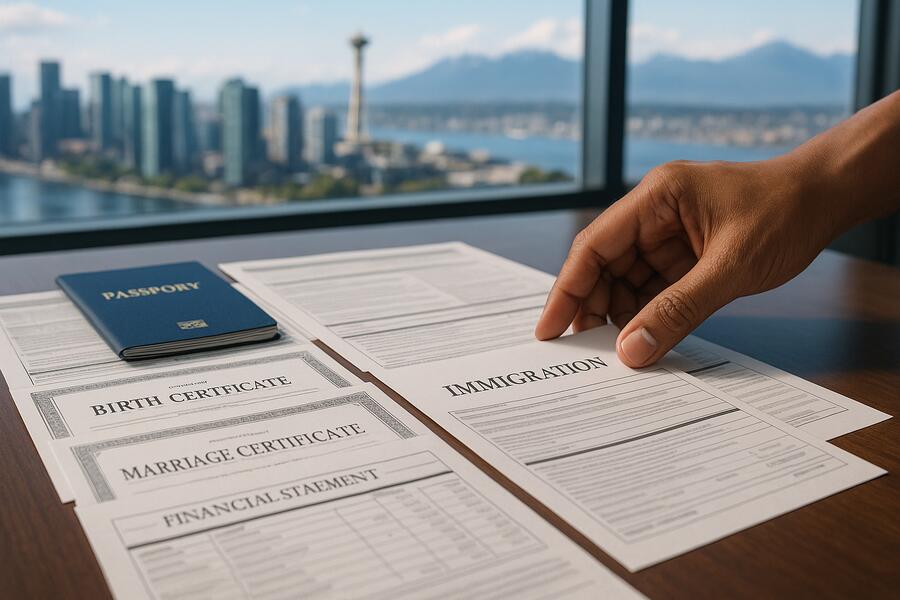
Navigating the complex world of U.S. immigration can feel like an intricate puzzle, with each piece representing a crucial document. A complete and accurate submission of documents is not just a formality; it’s the bedrock of a successful immigration application. Whether you’re seeking a green card, a work visa, or family reunification, understanding the specific documents needed for an immigration application is paramount to avoiding delays and potential denials.
At Ankeny Law, we’ve seen countless cases where a missing form or an improperly submitted piece of evidence can set an applicant back months, or even years. The stakes are high, and the process demands meticulous attention to detail. This isn’t just about collecting papers; it’s about building a compelling case that clearly demonstrates your eligibility under U.S. immigration law. If you find yourself overwhelmed or unsure about the specific requirements for your situation, seeking legal help for visas and immigration is a wise first step to ensure everything is in order from the outset.
Navigating the Immigration Document Maze with Confidence
Every immigration pathway has its unique set of requirements. What applies to a marriage-based green card will differ significantly from an employment-based petition. However, there are several foundational categories of immigration documentation that almost all applicants will encounter. Understanding these broad categories will help you prepare for the specific forms and supporting evidence immigration officials expect.
Essential Identity and Civil Documents
These documents establish who you are and your foundational life events. They are critical for verifying your identity and civil status.
-
Passport and Travel History
You’ll typically need a copy of your valid foreign passport’s biographic data page. For those already in the U.S., copies of all U.S. visas, admission stamps (like I-94 records), and previous immigration documents (e.g., I-20, DS-2019, EAD cards) are crucial to prove lawful entry and maintained status.
-
Birth Certificates
An original or certified copy of your long-form birth certificate, including both parents’ names, is a universal requirement. If applying as a parent or sibling of a U.S. citizen, the petitioner’s birth certificate may also be required.
-
Marriage Certificates and Divorce Decrees
If you are or have ever been married, you must provide certified copies of all marriage certificates. Crucially, if any previous marriages for either spouse ended, you must provide proof of termination, such as divorce decrees, annulment records, or death certificates. USCIS wants to ensure all marriages are legally dissolved before a new one is recognized for immigration purposes.
💡 Key Takeaway: Start gathering all identity and civil records early. These foundational documents are almost always required and can sometimes take time to obtain from your home country or previous jurisdictions. Ensure they are certified copies, not just photocopies.
Proving Financial Stability
Many immigration categories require proof that the applicant (or their sponsor) will not become a “public charge” in the U.S. This typically involves submitting financial evidence.
-
Affidavit of Support (Form I-864)
For family-based immigration, a U.S. citizen or lawful permanent resident sponsor must file an Affidavit of Support, demonstrating they can financially support the immigrant. This requires detailed financial documentation from the sponsor.
-
Tax Returns and Transcripts
The sponsor’s most recent federal tax returns (or IRS tax return transcripts) are usually required, along with W-2s, 1099s, and any other income verification. Sometimes, up to three years of tax documents are recommended to show consistent income.
-
Proof of Current Income and Assets
Recent pay stubs (3-6 months), employment verification letters on company letterhead, and statements of assets (bank accounts, property, investments) can further strengthen the financial evidence.
Employer-Sponsored Applications: The Job Offer
For employment-based green cards or work visas, the documentation largely centers around the job offer and the employer’s ability to pay the prevailing wage.
-
Form I-140 Petition and Supplement J
The employer typically files Form I-140, Petition for Alien Worker. If you are applying for adjustment of status (Form I-485) based on an employment petition, you’ll need Form I-485 Supplement J to confirm the bona fide job offer and your intent to accept it upon approval.
-
Employer Letters and Company Documents
Letters from the employer outlining the job role, salary, and start date are essential. The company may also need to provide documentation demonstrating its financial stability and ability to pay the offered wage, as well as proof of its legitimate business operations.
💡 Key Takeaway: Financial documents are scrutinized closely. Ensure all tax documents are properly filed, and income proof is consistent and verifiable. For employment petitions, clear communication and strong documentation from the employer are vital.
Demonstrating a Bona Fide Relationship
For marriage-based green cards, proving your marriage is legitimate and not solely for immigration purposes is critical. This is where “supporting evidence immigration” becomes highly subjective and crucial.
-
Joint Financial Records
Examples include joint bank statements, joint tax returns (filed as “married filing jointly”), joint health, auto, or home insurance policies, and joint utility bills for your shared residence. The more joint accounts and bills, the stronger the evidence.
-
Shared Living Evidence
Lease agreements or mortgage documents showing both spouses’ names and matching addresses, driver’s licenses with matching addresses, and property registered in both names.
-
Communal Life Evidence
Photographs showing your relationship’s progression, travel itineraries for trips taken together, affidavits from friends and family, and receipts for significant items purchased together all help paint a picture of a shared life.
💡 Key Takeaway: For marriage-based applications, don’t rely on just one or two types of evidence. A wide variety of documents demonstrating commingled lives and financial interdependence provides the strongest proof of a bona fide marriage.
Medical Examinations and Background Checks
Health and character are fundamental considerations in U.S. immigration.
-
Form I-693, Report of Medical Examination and Vaccination Record
This form must be completed by a USCIS-approved civil surgeon (if you are in the U.S.) or a panel physician (if applying from abroad). It’s submitted in a sealed envelope, documenting your health status and vaccination history.
-
Police Clearance Certificates and Court Records
If you have any criminal history, regardless of how minor or old, you must provide certified police and court records for all charges, arrests, or convictions. This applies even if you were granted amnesty or a pardon. Similarly, police clearance certificates may be required from countries you’ve lived in since age 16.
-
Military Records
If you served in the military of any country, a photocopy of your military record is generally required.
Understanding the Request for Evidence (RFE)
A Request for Evidence (RFE) is a formal notice from USCIS indicating that your application is incomplete or that they require additional information or documentation to make a decision. Missing documents are the most common trigger for an RFE. It’s a critical point in the process because if you don’t respond fully and on time, your application can be denied. An RFE means your case isn’t dismissed, but it needs more proof to move forward. This often involves providing clearer copies, certified translations, or specific types of evidence that were not included in the initial submission.
The Importance of Certified Translations
Any document not in English, or not in the official language of the country from which you are applying, must be accompanied by a certified English translation. This isn’t just a simple translation; it must include a statement signed by the translator affirming that: the translation is accurate, and the translator is competent to translate. Failing to provide proper certified translations is a frequent reason for RFEs and delays.
| Document Category | Examples | Key Considerations |
|---|---|---|
| Identity & Civil Status | Passports, Birth Certificates, Marriage/Divorce Decrees | Certified copies, long-form birth certificates, proof of all marital terminations. |
| Financial Evidence | Affidavit of Support (I-864), Tax Transcripts, Pay Stubs, Bank Statements | Sponsor’s income meeting poverty guidelines, consistent employment/assets. |
| Relationship Proof | Joint Bills, Leases, Bank Accounts, Photos, Affidavits | Variety of documents showing commingled lives, not just one type. |
| Background & Health | Medical Exam (I-693), Police Records, Military Records | Sealed medical exam, certified criminal records (even old ones). |
| Employer-Specific | Form I-140, Supplement J, Job Offer Letter, Company Financials | Proof of bona fide job offer, employer’s ability to pay. |
💡 Key Takeaway: Organization is your best friend. Create a checklist based on your specific application, gather all primary and supporting documents, and ensure every non-English document has a certified translation. Don’t underestimate the impact of an RFE.
The Criticality of Accuracy and Completeness
In our experience assisting clients in Seattle, WA and Vancouver, BC, one of the most common pitfalls is submitting an incomplete application or one with errors. USCIS and other immigration agencies operate on strict guidelines. Even a minor omission can lead to delays, an RFE, or even a denial. It’s not enough to simply have the documents; they must be presented in the correct format, be current, and directly support your claim for immigration benefits.
Successfully navigating the requirements for your immigration application demands thoroughness and an understanding of legal nuances. Whether it’s proving your financial standing, the legitimacy of your marriage, or your employment offer, each document plays a vital role in telling your story to immigration officials. Don’t leave your future to chance.
Frequently Asked Questions About Immigration Documents
What is the difference between an original document and a certified copy?
An original document is the one initially issued by the authority (e.g., a birth certificate from a government agency). A certified copy is a copy that has been verified by the issuing authority or a notary public as a true and exact copy of the original. For most USCIS submissions, photocopies of originals are acceptable, but you must be prepared to present originals upon request, especially during an interview. For some documents, like marriage termination papers, a certified copy from the court is often required.
Do I need to submit all my documents at once, or can I send them later?
It is always best to submit all required documents with your initial application to avoid delays. Submitting a complete package reduces the likelihood of an RFE and speeds up processing times. If you submit an incomplete application, you will almost certainly receive an RFE, which adds significant time to your case.
How old can my documents be?
Many documents, like birth certificates and marriage certificates, are timeless. However, financial documents (like tax returns and bank statements), employment verification letters, and medical examination results typically need to be recent – usually within the last few months or the most recent tax year. Always check the specific instructions for each form you are filing.
What if I can’t get an original birth certificate from my home country?
If you genuinely cannot obtain a required civil document like a birth certificate, you must submit secondary evidence. This could include baptismal certificates, school records, or affidavits from individuals who can attest to your birth facts. You must also provide a written explanation detailing why the primary document is unavailable. It’s crucial to refer to the Department of State Reciprocity Schedule for your country to see what alternative documents are accepted.