YOUR U.S. IMMIGRATION LAWYER IN VANCOUVER

Immigration Lawyer in Vancouver, BC

You are running a business, managing a team, or building a career that requires you to operate on both sides of the Canada-U.S. border. The rules governing your U.S. visa get enforced at the U.S. Consulate General right here in Vancouver, and a single documentation gap or a missed USCIS deadline can stop a business expansion before it produces a single dollar of U.S. revenue.

Vancouver sits at the center of one of the most active cross-border business corridors in North America. Global technology companies maintain Canadian offices in this city specifically to develop and pipeline talent into U.S. operations. Ankeny Law was built for exactly this environment: cross-border immigration counsel from attorneys who have worked both sides of the border, for clients who cannot afford to treat U.S. immigration as an afterthought.

20+ Years

Combined U.S. immigration enforcement & cross-border law experience

U.S. & Canada

Licensed in Washington, Arizona & British Columbia

Former CBP Officer

Firsthand knowledge of how government agencies adjudicate cases

15+ Visa Types

Including E-2, H-1B, L-1, O-1 & EB-5

Immigration attorney reviewing a U.S. work visa petition for a Vancouver employer

WHAT VANCOUVER IS UP AGAINST

What Makes U.S. Immigration from Vancouver Different from Filing Anywhere Else

Vancouver applicants face friction that applicants in most other cities simply do not encounter.

The U.S. Consulate General in Vancouver processes immigrant and nonimmigrant visa interviews for British Columbia residents, but consular scheduling is controlled by the U.S. government on its own timeline. Some BC residents find their immigrant visa interviews assigned to the Montreal consulate, requiring significant travel around government-set dates that cannot be negotiated.
The USMCA/CUSMA TN category is a good example of the asymmetry built into cross-border work authorization. TN status is fast and relatively straightforward for qualifying Canadian professionals, but it is non-immigrant by definition. It builds no path to permanent residence. An entrepreneur who needs U.S. market presence quickly may start with TN and later discover it was the wrong foundation for a long-term business plan.

The cost of getting this wrong is not abstract. A Vancouver tech founder whose E-2 treaty investor application is denied at the consulate window does not get a do-over that afternoon. A company whose intracompany transferee hits a work authorization wall cannot staff its U.S. office on schedule, and the project timelines shift accordingly. A professional who overstays their authorized period of admission, even briefly, can trigger inadmissibility bars that require an I-601 waiver and years of additional process to resolve. Vancouver’s position as a cross-border hub makes U.S. immigration consequential here in ways that demand preparation, not improvisation.

GOVERNMENT EXPERIENCE, CROSS-BORDER PERSPECTIVE

The Attorney Who Has Worked Both Sides of the Border Crossing

Most immigration attorneys have worked only one side of the process. They know how to file petitions and prepare clients for interviews, but they have never stood at a port of entry deciding who gets through and who does not. That distinction matters more than it might seem when you are preparing documentation that will face government scrutiny.

The lead attorney at Ankeny Law began his legal career not in a law office but enforcing U.S. immigration and customs law at a land border port of entry on the Washington State and Canadian boundary. He worked at the Pacific Highway Commercial Port of Entry in Blaine, adjudicating petitions under NAFTA and employment authorization at the precise crossing point where many Vancouver-area clients regularly travel. He later transitioned to CBP following the post-9/11 restructuring of the agency and spent more than a decade building enforcement experience from the government side of the counter.

That enforcement career informed a deliberate pivot to legal practice. He completed Canadian bar training through Ryerson University’s Law Practice Program in Toronto and obtained licensure in British Columbia through the Law Society of BC, adding to existing bar admissions in Washington and Arizona. The result is a vantage point that genuinely is rare in this field: he has stood at the port of entry exercising the discretion that determines admissibility, and he now builds the cases that face exactly that scrutiny. When a consular officer in Vancouver evaluates an E-2 application or a CBP officer at Blaine assesses a TN claim, the attorney preparing that record understands what the officer is actually looking for, because he spent years on that side of the desk.
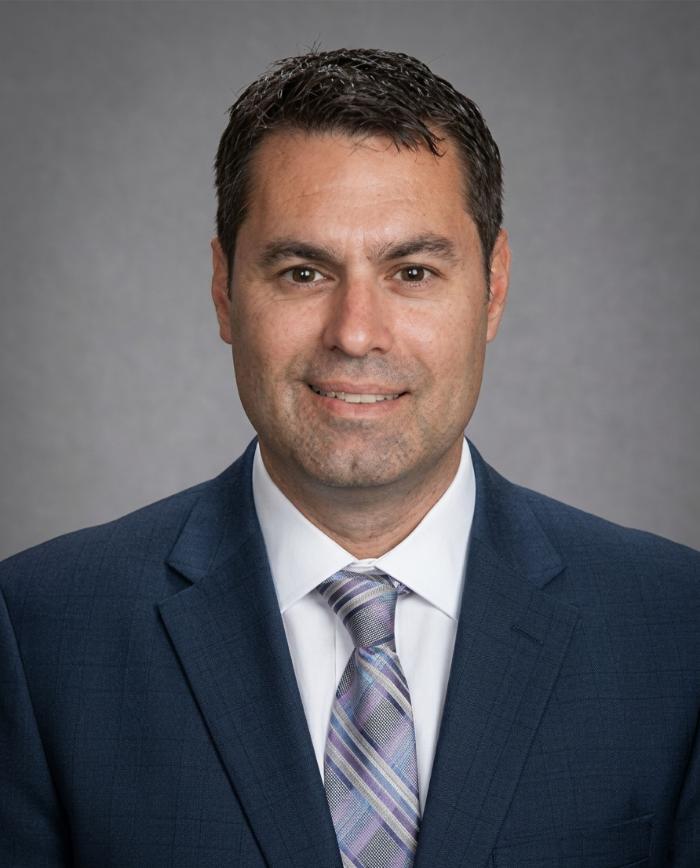
Ankeny Law's lead attorney, a former INS and CBP officer, serving cross-border immigration clients in Vancouver

VANCOUVER IMMIGRATION COUNSEL

U.S. Immigration Services for Vancouver Individuals and Businesses

A Vancouver-based client navigating U.S. immigration faces a layered process. The application originates in Canada, travels through a U.S. consular post or federal agency system, and ultimately produces a status that is governed by American federal law. These three environments operate on different timelines, communicate in different formats, and make decisions through different institutional processes. The services below address that full chain, not just the U.S. filing component.

E-2 Visa Lawyer

An E-2 treaty investor visa application processed at the U.S. Consulate General in Vancouver carries evidentiary standards that are stricter in practice than the statutory language suggests. Consular officers scrutinize the credibility of the business plan, the traceability of investment funds from source to U.S. deployment, and the documentation showing the investment is active and at-risk rather than contingent. Common reasons Vancouver-based E-2 applications are denied or returned for additional evidence include business plans that describe a concept rather than an operating enterprise, source-of-funds documentation with unexplained gaps, and investment figures that sit at the lower edge of the consulate’s informal sufficiency threshold. When an attorney with consular processing experience structures the application from the beginning, the evidentiary package is built around the questions the officer will actually ask, not the questions the applicant assumes will be asked.

Business Immigration Lawyer

When a Vancouver employer needs to staff a U.S. operation, the strategic choice matters as much as the paperwork. TN status under CUSMA is fast, but it is non-immigrant by design and cannot serve as a foundation for permanent residence sponsorship. L-1 intracompany transfers are powerful for multinational corporate structures, but they require a qualifying corporate relationship and a demonstrable specialized knowledge or managerial role. Employer-sponsored immigrant pathways require PERM labor certification before the visa petition can proceed, adding a Department of Labor compliance layer that has its own documentation and recruitment standards. The right strategy depends on the employer’s timeline, the employee’s long-term goals, and the corporate structure on both sides of the border. Getting the strategy right at the beginning avoids the cost of switching categories midstream.

Work Visa Attorney

Vancouver’s workforce produces an unusually high volume of candidates for U.S. work visas, and the landscape for those visas has shifted. H-1B specialty occupation petitions remain the primary pathway for Canadian professionals entering U.S. employer-sponsored positions, but the annual cap lottery and the recent $100,000 employer fee shift have altered the calculus for some Vancouver-area companies sending talent south. O-1 extraordinary ability petitions offer a cap-exempt alternative for individuals in technology, entertainment, and the sciences who can document sustained national or international recognition. TN professional visas under CUSMA allow qualifying Canadian professionals to enter the U.S. in specific occupational categories without a cap, often at the port of entry with minimal processing delay. When any of these applications is poorly documented, the consequence is not a delay. It is a refusal at the border or a denied petition, and the professional’s U.S. start date disappears.

Business Immigration Attorney

A Vancouver-headquartered company employing workers in U.S. offices carries I-9 compliance obligations that many Canadian companies underestimate until enforcement surfaces. Employment eligibility verification records must be completed, retained, and updated on a schedule that has no flexibility when ICE issues a Notice of Inspection. Deficiencies in an I-9 audit create liability exposure that scales with the size of the workforce and the length of time violations went unaddressed. An attorney who has worked the enforcement side understands what inspectors look for, what document patterns trigger escalated scrutiny, and how to structure both the corrective plan and the defense in a way that a purely private-sector practitioner may not anticipate. The goal is to resolve the inspection with minimal penalty and a documented corrective record that demonstrates good-faith compliance going forward.

Mandamus Lawyer

A Vancouver applicant whose USCIS or consular case has been pending well beyond normal processing windows, with no substantive decision and no meaningful response to status inquiries, has a legal remedy available that many applicants do not know exists. A mandamus action is a federal lawsuit filed in U.S. district court compelling the relevant agency to act on a matter it has unreasonably delayed. The threshold for filing is an agency delay that is objectively unreasonable given the nature of the application and the agency’s own published processing times. The realistic timeline and likely outcome depend on the specific agency, the specific case type, and the facts of the delay. For a Vancouver business owner or professional who has waited months or years for an E-2 renewal decision, an adjustment of status adjudication, or a petition outcome and cannot afford to remain in limbo, a mandamus action shifts the dynamic from waiting to compelling.

I-601 Waiver

A Vancouver resident who was refused entry at the border, received a prior removal order, or has a fraud finding or unlawful presence bar in their immigration history cannot resolve that problem by submitting a new visa application and hoping the officer does not notice. The underlying bar must be addressed directly. An I-601 extreme hardship waiver requires a compelling factual and legal record demonstrating that a qualifying U.S. citizen or permanent resident family member would suffer extreme hardship if the applicant is not admitted. The standard is higher than most applicants expect. Common Vancouver situations include a spouse or family member of a U.S. citizen who discovers a prior entry issue only when attempting to adjust status or obtain an immigrant visa at the consulate, and individuals who attempted a border crossing without legal counsel, received a removal order, and have since built family and professional ties that make the bar to U.S. entry deeply consequential.

NEIGHBOURHOODS & BUSINESS DISTRICTS

Serving Vancouver’s Neighbourhoods and Business Districts

Vancouver is not a single uniform market. The immigration footprint of a tech startup founder operating out of a Gastown heritage loft looks nothing like that of an investor establishing a U.S. subsidiary from a Coal Harbour tower, a health sciences professional in Fairview managing a work permit renewal during a multi-year green card backlog, or a family in Grandview-Woodland working through a cross-border residency matter complicated by a prior immigration issue. The right immigration strategy depends on the client’s industry context, business structure, and long-term goals, all of which vary by where they operate in this city.
The towers along West Georgia and Burrard, bounded by Burrard Inlet to the north and the financial district’s concentrated professional office stock, house a dense population of multinational corporations, financial services firms, and professional service organizations. The typical immigration client in this part of Vancouver is an HR director or in-house counsel managing a roster of foreign national employees at a Canadian subsidiary whose parent company operates in the United States. Their immigration needs tend to involve L-1 intracompany transfers for executives and specialized knowledge employees, I-9 compliance auditing for workers assigned to U.S. offices, and PERM labor certification when the company is ready to sponsor a key employee for a U.S. green card.

The compliance exposure in this environment is significant and often underestimated. A Canadian subsidiary that has been sending employees into U.S. operations for years may have accumulated I-9 deficiencies across a dispersed workforce without anyone in the Vancouver HR office realizing it. When ICE issues a Notice of Inspection, the documentation record that exists at that moment is the record that gets audited. Proactive internal auditing, conducted with the guidance of counsel who understands both the verification requirements and the enforcement priorities, is how Downtown Vancouver employers contain that risk before it becomes a penalty assessment.

Gastown’s heritage brick buildings and Yaletown’s converted warehouse district together form one of the densest concentrations of technology and creative industry employment in the city. Software companies, digital media studios, UX and product design firms, and professional services organizations cluster in both neighbourhoods, and many of them hire international talent who need U.S. work authorization to contribute to American client engagements or to transfer into a U.S. office as the company’s stateside operations grow.

The immigration questions that surface in Gastown and Yaletown tend to involve the specific intersection of rapid company growth and cross-border ambition. A startup that began as a purely Canadian operation, built a meaningful U.S. customer base, and now wants to establish a U.S. entity and move its founding team across the border needs to think carefully about whether E-2 treaty investor status, L-1 intracompany transfer, or a combination of the two is the right structure. The answer depends on how the U.S. entity is capitalized, what roles the founders will hold, and whether the immigration strategy needs to accommodate eventual permanent residence sponsorship. Getting those structural decisions right at the formation stage is significantly less expensive than restructuring them after the first visa application is filed.

H-1B and O-1 petitions are also common in this corridor. A Gastown software company sponsoring a senior developer for H-1B status must navigate the annual cap lottery, employer wage and working condition obligations, and the public access file requirements that attach to every H-1B employer. An O-1 petition for a designer or technical specialist requires a documented record of extraordinary achievement that goes well beyond a strong resume.

The Broadway corridor through Fairview and Mount Pleasant carries a character that is distinct from both the financial district and the tech-creative cluster to the north. This is the part of Vancouver where health sciences institutions, biotech firms, and the Broadway Tech Centre create an employment base built around credentialed professionals: researchers, clinicians, life sciences specialists, and technology professionals whose careers require recognized qualifications on both sides of the border.

Immigration situations in this corridor frequently involve the specialty occupation H-1B category, which requires both a theoretical and practical application of specialized knowledge and a U.S. job offer in a qualifying field. For health sciences and life sciences professionals, the additional complexity of credential recognition and professional licensing across the border adds a layer that purely business-focused immigration counsel may not be equipped to address. A physician or researcher who holds Canadian credentials must understand how those credentials translate in the U.S. regulatory environment before the visa petition can be properly structured.

The specific anxiety that runs through this community is the status gap. A foreign national professional who has built a career in Vancouver’s health or biotech sector, and who is in the middle of a multi-year PERM and immigrant visa process, faces real uncertainty about their ability to maintain continuous lawful status while the federal system works through a backlog. That gap has consequences not just for the individual but for the Vancouver employer who has invested in developing that person’s expertise. Understanding how to bridge authorized status during long immigrant visa queues, whether through H-1B extensions, change of status applications, or other mechanisms, is a core part of what immigration counsel in this corridor needs to handle.

Grandview-Woodland has one of the longest histories of immigrant settlement in Vancouver, and the community it has shaped reflects that: culturally diverse, mixed residential and commercial, and populated by individuals and families who often have significant personal and family ties on both sides of the border. The immigration matters that arise in this part of Vancouver are frequently not driven by corporate timelines or startup ambitions. They are driven by family.

Clients in Grandview-Woodland often come in because they are trying to bring a spouse or family member to the United States, because a fiancé visa application has stalled or been denied, or because a family member discovered a prior immigration issue only when the current application surfaced it. The inadmissibility situations that affect this community can be traced to prior periods of unlawful U.S. presence, a past border crossing refused without formal representation, a prior removal order that was not fully understood at the time, or a criminal matter that now constitutes a bar to admission.

The pattern that creates the most complex situations here is the attempt to navigate a consular visa application or border crossing without legal representation, receiving a refusal or removal order as a result, and then living with that record for years before seeking help. By the time the situation reaches an attorney, the record is more complicated than it would have been at the outset, and the I-601 waiver process must account for what happened at the earlier stage. The good news is that these situations are not uniformly unresolvable. What they require is an honest assessment of the record, a realistic understanding of the waiver standard, and a factual narrative that presents the extreme hardship showing in the most compelling way the evidence supports.

Ankeny Law cross-border immigration counsel serving Vancouver and the Lower Mainland region

COVERAGE AREA

One Attorney Relationship for Clients Across the Region

Many Vancouver-based clients have immigration needs that do not stop at the city limits. An executive who oversees operations in surrounding suburbs and outlying communities, who crosses the border multiple times a month for business meetings and client engagements, and who employs workers across a geographically dispersed team on both sides of the border does not benefit from managing two separate legal relationships with two attorneys who communicate through each other.

A single attorney licensed in both jurisdictions, with offices on both sides of the crossing, reduces the coordination friction that multi-counsel arrangements create. Immigration strategy for a client whose footprint spans the broader service area and nearby commercial corridors can be built as a single integrated plan, not a patchwork of separate engagements with different advisors applying different frameworks. Whether the compliance question arises at a U.S. worksite or a Canadian office, the answer comes from the same attorney who already knows the full picture of the client’s corporate structure, immigration history, and long-term goals.

COMMON QUESTIONS

Common Questions from Vancouver Immigration Clients

A consular refusal is not necessarily the end of the matter, but the path forward depends on the legal ground of the refusal. A refusal under INA 214(b), for nonimmigrant intent, is handled very differently from a refusal based on a ground of inadmissibility, which may require a waiver such as an I-601 before the case can move forward. The right next step depends on what the officer actually cited, so the most reliable way to understand your options is to have an attorney review the specific ground of refusal before you reapply or submit new evidence.
The firm’s lead attorney is licensed to practice in Washington, Arizona, and British Columbia, which allows the firm to handle U.S. immigration matters before federal agencies and courts while also representing clients in Canadian proceedings. For a Vancouver client with a cross-border matter, that dual jurisdiction often means one attorney relationship rather than two.
The lead attorney began his career enforcing U.S. immigration and customs law at a land border port of entry on the Washington and Canadian boundary, and later spent more than a decade with CBP. When a consular officer in Vancouver evaluates an E-2 application or a CBP officer at Blaine assesses a TN claim, the attorney preparing that record understands what the officer is actually looking for, because he spent years exercising that same discretion from the government side of the counter.
TN status under CUSMA is fast and relatively straightforward for qualifying Canadian professionals, but it is non-immigrant by definition and builds no path to permanent residence on its own. An entrepreneur or professional who needs U.S. presence quickly may start with TN and later find it was the wrong foundation for a long-term plan. Choosing the right category at the outset, with an eye on eventual permanent residence, avoids the cost of switching categories midstream.
When a USCIS or consular case has been pending well beyond normal processing windows, with no substantive decision and no meaningful response to inquiries, a mandamus action may be available. This is a federal lawsuit that asks a U.S. district court to compel the agency to act on a matter it has unreasonably delayed. Whether the delay is legally unreasonable depends on the case type and the agency’s own published processing times, so the first step is an assessment of your specific facts.
A prior refusal, removal order, fraud finding, or unlawful presence bar cannot be resolved by simply filing a new application and hoping it goes unnoticed. The underlying bar has to be addressed directly, often through an I-601 extreme hardship waiver that demonstrates a qualifying U.S. citizen or permanent resident family member would suffer extreme hardship if you are not admitted. These situations are not uniformly unresolvable, but they require an honest assessment of the record and a realistic understanding of the waiver standard.
Call or contact the firm online to book a consultation. During that meeting, the attorney reviews your situation, explains realistic timelines, and recommends a strategy based on your specific circumstances and goals on both sides of the border.

LET’S TALK

Contact Ankeny Law, Your U.S. Immigration Lawyer in Vancouver

Cross-border immigration matters rarely improve on their own, and the cost of a missed deadline or a documentation gap lands on your business or your family, not on the agency. If you are weighing a U.S. visa strategy, managing an agency delay, or trying to understand what a prior immigration issue means for your future, a direct conversation with an attorney who has worked both sides of the border is the fastest way to get clarity.

Vancouver Office, 500-666 Burrard Street, Vancouver, BC V6C 3P6 · (604) 314-1848
Seattle Office, 506 2nd Ave, Suite 1400, Seattle, WA 98104 · (206) 686-1589

Call (604) 314-1848 or contact us online to schedule your immigration lawyer consultation. We serve clients throughout Vancouver, the Lower Mainland, and the cross-border corridor into Washington State.

Schedule a consultation with a U.S. immigration attorney at Ankeny Law in Vancouver