
By Jason Ankeny, Former INS/CBP Officer and Immigration Attorney
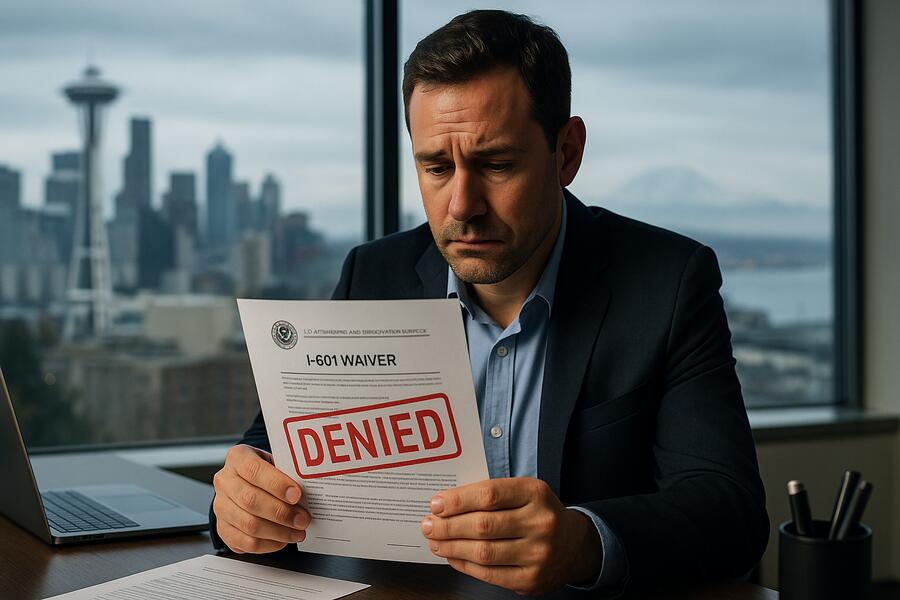
Navigating the complex world of U.S. immigration can be a daunting experience, especially when dealing with inadmissibility and the need for waivers. The I-601 Application for Waiver of Grounds of Inadmissibility is a critical tool for many individuals seeking to overcome certain obstacles to obtaining a green card or visa. However, receiving an I-601 waiver denial can be devastating, halting plans and causing immense stress for families. At Ankeny Law, with offices in Seattle, WA and Vancouver, BC, we understand the profound impact these decisions have and are here to guide you through the intricacies of the process.
The I-601 waiver is designed to forgive specific grounds of inadmissibility, allowing deserving applicants to proceed with their immigration journey. Unfortunately, denials are common, often stemming from insufficient evidence of “extreme hardship,” failure to address all grounds, or procedural missteps. Understanding the common i-601 waiver denial reasons appeal and your options afterward is paramount. When faced with a denial, it’s crucial to consult with immigration waiver specialists who can meticulously review your case and advise on the best path forward.
Understanding I-601 Waiver Denials
Most Common Reasons for I-601 Waiver Denials
The U.S. Citizenship and Immigration Services (USCIS) scrutinizes every I-601 waiver application closely. While each case is unique, several patterns emerge when reviewing the reasons for denial. The primary challenge often lies in adequately demonstrating “extreme hardship” to a qualifying relative.
Insufficient Evidence of Extreme Hardship
This is, by far, the most frequent reason for an I-601 waiver denial. USCIS officers are not easily convinced that an applicant’s U.S. citizen or lawful permanent resident spouse or parent would suffer “extreme hardship” if the waiver is not approved. The hardship must go beyond the normal difficulties associated with family separation due to immigration issues. Merely stating that hardship exists is not enough; comprehensive and compelling documentation is required.
- Financial Hardship: Loss of income, inability to support dependents, significant debt, or the qualifying relative’s inability to maintain their standard of living without the applicant.
- Medical Hardship: Illnesses or conditions requiring specialized treatment only available in the U.S., or a qualifying relative’s inability to access necessary medical care abroad.
- Psychological Hardship: Documented emotional trauma, mental health conditions, or significant distress resulting from separation, often requiring professional evaluation.
- Educational/Career Impact: If the qualifying relative’s ability to pursue education or employment opportunities would be severely affected by the applicant’s denial of entry.
- Country Conditions: Evidence of instability, violence, lack of medical care, or economic hardship in the country to which the applicant would return.
💡 Key Takeaway: The burden of proof for “extreme hardship” is high. Applicants must provide extensive, specific, and well-documented evidence across multiple categories (financial, medical, psychological, etc.) to demonstrate hardship beyond typical separation.
Unwaivable Grounds of Inadmissibility
Not all grounds of inadmissibility can be waived through an I-601 application. It’s critical to understand the limitations of this waiver from the outset. Grounds that generally cannot be waived include:
- Drug trafficking offenses.
- Serious security-related grounds.
- Most aggravated felonies.
- Certain international child abduction violations.
If an applicant is inadmissible on one of these non-waivable grounds, an I-601 waiver will be denied, regardless of how compelling the extreme hardship claim might be. This is why a thorough initial assessment by a knowledgeable immigration attorney is crucial to determine eligibility.
Applicant Deemed a National Security or Public Safety Risk
Even if an applicant meets the technical requirements for a waiver, USCIS has broad discretion to deny applications if they deem the individual to pose a risk to national security or public safety. This can stem from past criminal history, associations, or other activities that raise concerns. While some criminal convictions are waivable, serious offenses or a pattern of criminal behavior can lead to a discretionary denial.
Procedural Deficiencies and Inconsistencies
The application process itself is complex, and any missteps can lead to a denial. Common procedural issues include:
- Lack of Supporting Documentation: Merely claiming hardship without submitting corroborating evidence (medical records, financial statements, affidavits, expert opinions) is a recipe for denial.
- Failure to Address All Grounds of Inadmissibility: If an applicant is inadmissible on multiple grounds, all must be identified and addressed in the waiver application. Overlooking even one ground will result in a denial.
- Inconsistencies or Omissions: Any inaccuracies, inconsistencies, or omissions in the information provided can raise questions about the applicant’s credibility, leading to denial.
- Insufficient Legal Arguments: A poorly articulated legal argument or failure to cite relevant case law can weaken an otherwise strong claim.
These administrative errors highlight the importance of meticulous preparation and attention to detail throughout the application process.
What Happens After an I-601 Waiver Denial?
A denial is not necessarily the end of the road. Depending on the specifics of your case, there are several avenues you might explore.
Motion to Reopen or Reconsider with USCIS
If your I-601 waiver was denied by USCIS, you might be able to file a motion to reopen or a motion to reconsider:
- Motion to Reopen: This asks USCIS to review your case again based on new facts or evidence that were not available or presented in the original application. You must demonstrate that the new evidence is material and was not discoverable at the time of the original decision.
- Motion to Reconsider: This asks USCIS to review its decision based on an alleged incorrect application of law or policy. You argue that the decision was legally flawed based on the evidence already in the record.
These motions have strict filing deadlines and requirements, making expert legal guidance essential.
Appeal to the Board of Immigration Appeals (BIA)
If your I-601 waiver denial occurred in the context of removal (deportation) proceedings, and the Immigration Judge denied the waiver, you would typically appeal that decision to the Board of Immigration Appeals (BIA). The BIA is the highest administrative body for interpreting and applying immigration laws. A BIA waiver appeal is a formal legal process, requiring briefs and a thorough understanding of appellate procedures and immigration law.
Reapplication with a Stronger Package
In many cases, if a denial was due to insufficient evidence or procedural flaws, the most effective course of action is to reapply for the I-601 waiver. This involves building a much stronger application package, addressing the exact reasons for the previous denial. This approach allows you to correct past mistakes, gather more compelling evidence, and refine your extreme hardship argument. It’s often recommended after a denial, especially if the original application was prepared without experienced legal counsel.
💡 Key Takeaway: Options after an I-601 denial include motions to reopen/reconsider (USCIS), BIA appeals (in removal proceedings), or reapplying with a significantly stronger, more comprehensive application. Each option has specific requirements and timelines.
When to Seek a Second Opinion from a Different Attorney
If you’ve received an I-601 waiver denial and feel uncertain about your current legal representation or the advice you’ve received, seeking a second opinion from a different immigration attorney can be invaluable. A fresh pair of eyes from an attorney specializing in waiver denials and appeals can sometimes identify overlooked details, alternative strategies, or stronger legal arguments. This is particularly true if your initial application was handled by someone less experienced or if the denial seems unjust based on the facts of your case. An experienced firm like Ankeny Law, well-versed in complex waiver cases, can provide that critical objective assessment.
Here’s a comparison of I-601 and I-601A waivers:
| Feature | I-601 Waiver | I-601A Provisional Waiver |
|---|---|---|
| Grounds Waived | Broader range (unlawful presence, fraud/misrepresentation, certain criminal convictions) | Limited to unlawful presence only |
| Application Location | Filed while outside or inside the U.S. (depends on adjustment vs. consular processing) | Filed while in the U.S., before departing for immigrant visa interview abroad |
| Qualifying Relative | U.S. Citizen or LPR spouse or parent | U.S. Citizen or LPR spouse or parent |
| Processing Time (Average) | 12-18 months | Variable, often shorter than I-601 |
| Purpose | Overcome inadmissibility for a visa or green card | Allow applicants to remain in U.S. while waiver is pending, minimizing time abroad |
💡 Key Takeaway: A second opinion can provide fresh insights and alternative strategies after an I-601 waiver denial, especially if concerns exist about the initial legal approach or if the case is complex.
Ankeny Law: Your Partner in Overcoming Inadmissibility
At Ankeny Law, we understand that an I-601 waiver denial can feel like a roadblock, but often, it’s a call to refine your strategy. Our team of experienced immigration attorneys in Seattle, WA, and Vancouver, BC, is dedicated to providing thorough, compassionate, and effective legal representation. We meticulously review denial notices, identify the underlying causes, and develop robust plans whether that means filing a motion, pursuing an appeal, or preparing a stronger reapplication. Our goal is to ensure you have the best possible chance to achieve your immigration goals.
Understanding why denials happen is easier with a clear picture of the waiver itself. See our overview of what an I-601 waiver is and who needs one for the full context.
Frequently Asked Questions About I-601 Waiver Denials
What is the difference between an I-601 and an I-601A waiver?
The I-601 waiver covers a broader range of inadmissibility grounds, including unlawful presence, fraud, and certain criminal convictions. It can be filed by individuals applying for immigrant visas abroad or adjusting status in the U.S. The I-601A (Provisional Unlawful Presence Waiver) is specifically for individuals who are only inadmissible due to unlawful presence and are applying for an immigrant visa at a U.S. embassy or consulate abroad. It allows them to apply for the waiver while still in the U.S., minimizing their time spent outside the country.
Can I appeal an I-601A provisional waiver denial?
No, an I-601A provisional waiver denial cannot be formally appealed to the Board of Immigration Appeals (BIA). However, you can often reapply with a stronger application, addressing the reasons for the initial denial. Consulting an attorney after an I-601A denial is crucial to determine the best path for reapplication.
How long does it take to process an I-601 waiver?
I-601 waiver processing times vary significantly depending on the USCIS service center, the complexity of the case, and current caseloads. On average, processing can take anywhere from 12 to 18 months, or sometimes even longer. It’s important to monitor USCIS processing times and stay in communication with your attorney.
What if my qualifying relative is not a U.S. citizen or LPR spouse or parent?
To qualify for an I-601 waiver based on extreme hardship, the hardship must be to a qualifying relative who is a U.S. citizen or lawful permanent resident (LPR) spouse or parent. Hardship to other relatives, such as siblings or children who are not U.S. citizens or LPRs, generally does not meet the eligibility criteria for the I-601 waiver, although children’s hardship can sometimes be indirectly considered as part of a parent’s overall hardship.
The current I-601 waiver requirements are published on the USCIS I-601 page.
A denied waiver can often be refiled stronger, and an I-601 waiver lawyer can pinpoint what the adjudicator found insufficient the first time.