
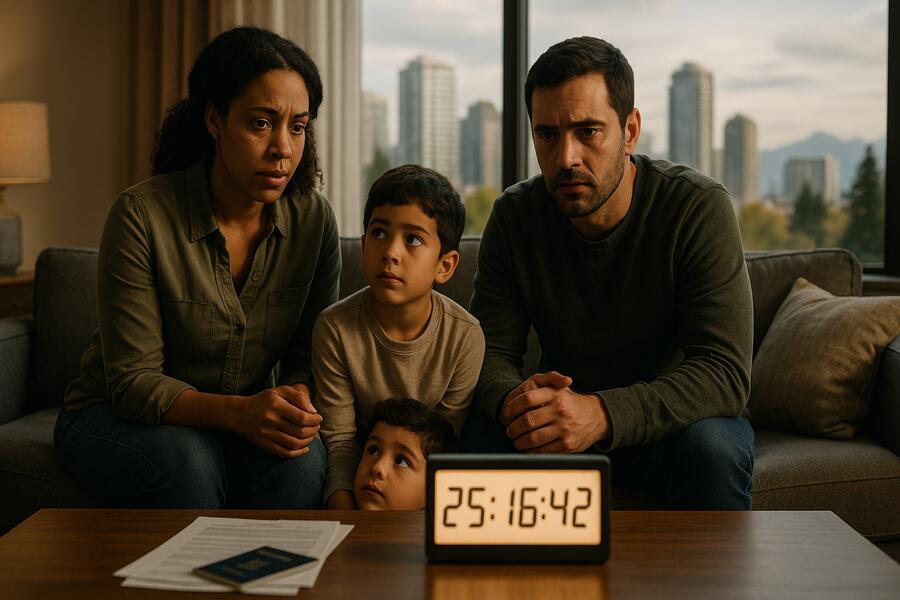
For foreign nationals facing grounds of inadmissibility to the United States, the Form I-601, Application for Waiver of Grounds of Inadmissibility, can be a critical step toward achieving legal status. However, a common and often anxious question among applicants is: “How long does the I-601 waiver processing time actually take?” The answer is rarely simple, as the I-601 timeline can vary significantly based on numerous factors.
At Ankeny Law, with offices in Seattle, WA, and Vancouver, BC, we understand the emotional toll and uncertainty that come with lengthy immigration processes. Our team provides comprehensive unlawful presence legal help, guiding clients through the intricacies of I-601 waivers and setting realistic expectations for the duration of the process. Let’s delve into what influences the I-601 waiver processing time and what you can expect.
I-601 Waiver Processing Times: A Detailed Breakdown
The I-601 waiver is a complex application that is typically filed from abroad, after an applicant has been found inadmissible by a U.S. consular officer during an immigrant visa interview. This means the applicant is already outside the U.S. while awaiting the waiver decision.
Current Average Processing Times for I-601 Waivers
Official USCIS data and anecdotal evidence from legal practitioners indicate substantial variability in I-601 processing. As of early to mid-2026:
- USCIS Median Processing Time: Recent Department of Homeland Security data suggests a median processing time for Form I-601 around 20.5 months.
- Broader Estimates: Many reports indicate processing times ranging from 12 to 36 months, with some suggesting 24-36 months for waivers adjudicated at USCIS field offices abroad with smaller staffing.
- Individual Case Variation: It’s crucial to remember these are averages. Simpler cases with strong evidence might be processed more quickly (sometimes 8-14 months), while highly complex applications or those requiring additional review can take longer.
Factors Causing Delays in I-601 Processing
Several elements can significantly impact how long your I-601 waiver takes to process:
- Completeness of the Application: Errors, omissions, or incomplete forms are primary causes of delays. A Request for Evidence (RFE) from USCIS can add months to the processing time while you gather and submit additional documentation.
- Complexity of the Case: Waivers involving multiple grounds of inadmissibility, serious criminal history, or detailed allegations of fraud inherently require more extensive review.
- Service Center Workload: USCIS operates various service centers, and their individual caseloads and staffing levels fluctuate. Processing times can differ from one center to another.
- Quality of “Extreme Hardship” Evidence: Demonstrating “extreme hardship” to a qualifying U.S. citizen or lawful permanent resident spouse, child, or parent is central to the I-601. Weak or insufficient evidence will prolong adjudication or lead to denial.
- Consular Post Involved: While the I-601 is adjudicated by USCIS, the administrative processing and communication between USCIS and the specific U.S. consulate can add time, particularly if follow-up is needed.
- Administrative Processing: Some cases may trigger additional security checks or administrative processing, which is unpredictable and can add weeks or months to the overall timeline.
💡 Key Takeaway: The I-601 waiver processing time is highly variable, often ranging from 1 to 3 years. A complete, well-documented application that clearly demonstrates “extreme hardship” is the best way to minimize delays.
I-601 vs. I-601A Provisional Waiver Processing Times
It’s important to distinguish the I-601 processing from that of the I-601A Provisional Unlawful Presence Waiver. The I-601A is designed to be filed while the applicant is still in the U.S. (before departing for their consular interview) and generally only waives unlawful presence.
- I-601A Processing: In contrast to the I-601, I-601A processing times have also been lengthy. As of early 2026, the average processing time for an I-601A waiver has been around 28.5 months, with some reports indicating 80% of cases taking up to 37-43.5 months.
- Key Difference: While both have significant wait times, the I-601A allows the applicant to remain with their family in the U.S. during much of the processing, reducing the period of separation. The I-601 requires the applicant to be abroad for the entire duration of its processing.
💡 Key Takeaway: While both I-601 and I-601A waivers involve substantial wait times (often over two years for I-601A), the I-601 requires the applicant to wait outside the U.S. for the decision, intensifying family separation.
The Overall Timeline: From Inadmissibility to Admission
The I-601 waiver processing time is just one component of the entire immigration journey. The total timeline from first contact with immigration authorities to actual admission as a lawful permanent resident can involve several stages:
- Immigrant Petition (e.g., I-130): Filing and approval of the underlying family- or employment-based petition. This alone can take months to years, depending on the visa category and country of origin.
- Consular Interview & Inadmissibility Finding: The applicant attends an immigrant visa interview abroad and is found inadmissible, triggering the need for the I-601.
- I-601 Preparation & Filing: Gathering documents and preparing the waiver package (can take 1-3 months).
- I-601 Processing: The bulk of the waiting period, as detailed above (12-36+ months).
- Post-Approval Visa Issuance: Once the I-601 is approved, the consulate will finalize the immigrant visa processing, which typically takes a few weeks for administrative steps and visa stamping.
- U.S. Admission: The applicant can then travel to the U.S. as a lawful permanent resident.
Table: I-601 Waiver Processing Times & Related Stages
| Stage | Estimated Timeframe (Variable) | Notes |
|---|---|---|
| Underlying Immigrant Petition (e.g., I-130) | 6 months – Several years | Depends on family relationship, country, and visa bulletin availability. |
| I-601 Waiver Preparation | 1-3 months | Gathering extensive documentation for “extreme hardship.” |
| I-601 Waiver Adjudication (USCIS) | 12-36+ months (median ~20.5 months) | Highly variable by service center, caseload, and case complexity. |
| Post-Approval Consular Processing | 2-6 weeks | Administrative steps, visa printing, and return of passport. |
| Total Potential Timeline | Multiple years | From initial petition to final U.S. admission. |
Navigating Your I-601 Waiver with Ankeny Law
The extended I-601 waiver processing time, coupled with the emotional stress of family separation, makes seeking experienced legal counsel paramount. At Ankeny Law, our immigration team in Seattle, WA, and Vancouver, BC, is dedicated to supporting clients through this challenging process.
We provide comprehensive services, including:
- Thoroughly evaluating your grounds of inadmissibility and waiver eligibility.
- Meticulously gathering and organizing all necessary evidence to demonstrate “extreme hardship.”
- Crafting a compelling legal argument to maximize your chances of approval.
- Communicating effectively with USCIS and consular offices on your behalf.
- Providing ongoing support and realistic expectations throughout the lengthy process.
Don’t face the I-601 waiver process alone. Contact Ankeny Law today to discuss your case and ensure the strongest possible representation.
Processing time is easier to plan around with a clear picture of the waiver itself first. See our overview of what an I-601 waiver is and who needs one for the full context.
Frequently Asked Questions About I-601 Waiver Processing
Can I expedite my I-601 waiver processing?
Unfortunately, USCIS generally does not offer expedited processing for Form I-601 waivers. Decisions are made in the order they are received, and applicants must await their turn in the queue. The best way to “expedite” your case is to ensure your initial application is meticulously prepared, complete, and compelling to avoid RFEs or denials that would cause further delays.
What is “extreme hardship” and how do I prove it for an I-601 waiver?
“Extreme hardship” is a high legal standard. It means your U.S. citizen or lawful permanent resident qualifying relative (spouse, child, or parent) would suffer more than the usual emotional or financial difficulties if you are denied entry or if they had to relocate to your home country. Proving it requires extensive documentation, including medical records, psychological evaluations, financial statements, educational impacts, and evidence of unique country conditions, all carefully compiled and presented in a legal brief.
What happens after my I-601 waiver is approved?
Once your I-601 waiver is approved by USCIS, the approval notice is sent to the U.S. consulate that found you inadmissible. The consulate will then typically schedule the final steps for your immigrant visa issuance. This usually involves a few weeks of administrative processing, after which your immigrant visa stamp will be placed in your passport, allowing you to enter the U.S. as a lawful permanent resident.
Can I check the status of my I-601 waiver online?
Yes, you can check the status of your I-601 waiver online using the receipt number provided by USCIS after you file your application. You can visit the USCIS Case Status Online page and enter your receipt number for updates. It’s also advisable to create a USCIS online account to receive automatic notifications for any changes in your case status.