
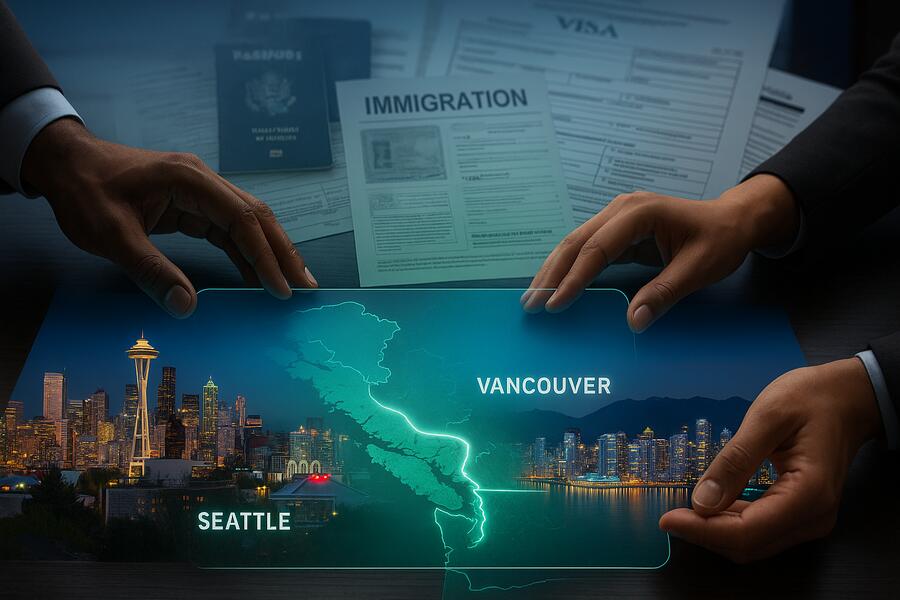
By Jason Ankeny, Former INS/CBP Officer and Immigration Attorney
In today’s interconnected global economy, businesses frequently need to move talent across borders or enable employees to work remotely from different countries. These corporate relocations and cross-border work arrangements present a myriad of opportunities but also complex immigration challenges. Companies in Seattle, WA, and Vancouver, BC, often grapple with ensuring compliance, maintaining work authorization, and avoiding disruptive gaps in employment status. At Ankeny Law, our experience as a dedicated business immigration attorney team highlights the critical need for meticulous planning and expert guidance in these scenarios.
From navigating the nuances of different visa categories to understanding the “gray zones” of international remote work, the immigration landscape for global mobility is constantly evolving. Ignoring these complexities can lead to significant fines, visa denials, and the unexpected loss of key employees. Proactive planning is not just a best practice; it’s a necessity for any company looking to efficiently and legally manage its international workforce.
💡 Key Takeaway: Corporate relocation and cross-border work demand meticulous immigration planning. Companies must proactively address visa requirements, compliance, and work authorization to avoid costly delays, fines, or loss of talent.
Immigration Considerations for Corporate Relocation
Relocating an employee, whether domestically to a new U.S. location or internationally to a different country, requires a comprehensive review of their current immigration status and the requirements of the destination country. This is where business immigration attorney expertise becomes invaluable.
Visa Category Changes and Requirements
Most employment-based visas are specific to an employer, a job role, and sometimes even a specific work location. A corporate relocation can trigger the need for new or amended visa petitions.
- Domestic Relocation (within the U.S.):
- H-1B Visas: If an H-1B employee moves to a new geographical area (defined by a different Metropolitan Statistical Area), the employer typically needs to file an amended H-1B petition with USCIS before the employee begins work at the new location. This is because the underlying Labor Condition Application (LCA) is tied to a specific area’s prevailing wage.
- L-1 Intracompany Transferee Visas: While L-1 visas are more flexible regarding new domestic locations, significant changes in job duties or reporting structures should still be reviewed to ensure continued eligibility.
- Other Visas (E-3, TN, O-1, etc.): The specific requirements vary, but generally, a change in the primary work location within the U.S. warrants a review to ensure no material change affects the original visa approval.
- International Relocation (to another country):
- When a U.S. employee is transferred to a foreign branch, they will need to secure appropriate work authorization in the destination country. This can involve obtaining work permits, resident visas, and complying with local labor laws. Each country has its own unique immigration system.
- Conversely, bringing a foreign employee to the U.S. requires navigating U.S. visa categories (e.g., L-1 for intracompany transfers, H-1B for specialized occupations, E-2 for treaty investors, O-1 for extraordinary ability, TN for NAFTA/USMCA professionals).
Timing Issues and Avoiding Gaps in Status
Immigration processes are often lengthy, and timing is a critical factor in corporate relocations. Failing to plan adequately can lead to periods where an employee is unauthorized to work or, worse, falls out of legal status.
- Pre-Planning: Start immigration planning as soon as a relocation is contemplated. Visa processing times can vary widely (from weeks to many months) depending on the country, visa type, and current government backlogs.
- “Bridge” Visas: Sometimes, a temporary visa (like a B-1 business visitor visa for initial consultations) might be used, but extreme caution is needed to ensure the individual is not engaging in productive “work” that requires a work permit.
- Maintaining Status: For employees already in the U.S. on a work visa and moving to a new domestic location, the employer must ensure the amended petition is filed correctly and in a timely manner to avoid any gaps in work authorization. For international moves, careful coordination is needed to ensure the employee’s existing status in one country doesn’t expire before new status is secured in the destination country.
Work Authorization in the Destination Country
The core challenge in any international relocation is securing the legal right for the employee to work in the destination country. This involves more than just a visa.
- Work Permits and Residence Permits: Many countries require a separate work permit application, which might be tied to specific labor market tests, in addition to a residence permit or visa.
- Local Registrations: Beyond immigration, employees often need to register with local authorities for tax purposes, social security, and healthcare.
- Compliance with Local Labor Laws: Companies must be aware of and comply with the employment laws, wage requirements, and benefits structures of the destination country.
💡 Key Takeaway: Corporate relocations necessitate careful visa planning, often requiring new or amended petitions depending on the visa type and geographical change. Proactive timing is crucial to prevent gaps in legal work authorization.
The Rise of Cross-Border Remote Work and Its Immigration Gray Zone
The COVID-19 pandemic accelerated the adoption of remote work, leading to a new frontier in global mobility: employees working for a company in one country while physically residing in another. This “cross-border remote work” creates significant immigration compliance complexities.
Defining “Work” Across Borders
One of the primary challenges is defining what constitutes “work” in a particular jurisdiction for immigration purposes. Even if an employee is paid by a U.S. company, if they are physically performing work in Canada, they are generally considered to be “working” in Canada and may require Canadian work authorization.
- Tourist Visas/Status: It’s a common misconception that individuals can work remotely on a tourist visa (e.g., B-1/B-2 in the U.S., or simply visa-exempt status for Canadians entering the U.S.). Tourist visas are almost never appropriate for productive work and can lead to serious immigration violations, including future entry bans.
- Digital Nomad Visas: Some countries have introduced specific “digital nomad” visas to address this trend, allowing individuals to live in their country while working for foreign employers. However, these are not universally available and come with their own set of requirements.
Immigration Compliance Risks
The “gray zone” of cross-border remote work is fraught with compliance risks for both the employer and the employee:
- Unauthorized Employment: The most significant risk is that the employee is found to be engaging in unauthorized employment in the country where they are physically located, leading to fines for the employer and potential deportation or future entry bans for the employee.
- Permanent Establishment & Tax Implications: Having employees work remotely from a foreign country can inadvertently create a “permanent establishment” for the employer in that country, triggering corporate tax obligations.
- Local Labor Law Compliance: The employer may become subject to the labor laws of the remote employee’s country of residence, including wage, benefits, and termination requirements.
- Social Security and Benefits: Determining where to pay social security, unemployment insurance, and other benefits becomes complex.
Best Practices for Cross-Border Remote Work
To navigate this complex landscape, companies should:
- Establish Clear Policies: Develop clear internal policies regarding where employees are permitted to work remotely and for what duration.
- Assess Each Scenario: Treat each cross-border remote work request as a unique immigration assessment. Consult with an immigration attorney to determine if any work authorization is required in the remote location.
- Consider Short-Term Assignments: For very short-term engagements (e.g., a few days), some countries may have business visitor exemptions, but these are highly restrictive regarding the nature of the work.
- Explore Work Permits: If ongoing remote work is necessary, explore whether a specific work permit or visa is available in the employee’s country of residence.
💡 Key Takeaway: Cross-border remote work is an immigration “gray zone.” Employers must understand that physical presence usually dictates work authorization, even if paid by a foreign entity. Unauthorized work can lead to severe penalties, necessitating careful legal review for each scenario.
Managing corporate relocation and the complexities of cross-border work arrangements requires foresight, detailed planning, and specialized immigration expertise. Whether you’re moving an employee from Vancouver, BC, to Seattle, WA, or enabling remote work from a different country, Ankeny Law is here to ensure your company remains compliant and your talent moves seamlessly. Our team helps businesses navigate the intricate immigration landscape to support their global mobility strategies effectively.
A cross-border relocation is one path into hiring internationally; sourcing new talent from abroad entirely is another. See our guide to hiring international talent for the legal steps employers need to follow either way.
Frequently Asked Questions About Corporate Relocation and Cross-Border Immigration
Does a domestic relocation within the U.S. always require a new visa filing for an H-1B employee?
Not always a *new* visa, but often an *amended* petition. If an H-1B employee moves to a new geographical area that is covered by a different Labor Condition Application (LCA) filing, an amended H-1B petition must be filed with USCIS before the employee starts working at the new location. Minor changes within the same metropolitan statistical area may not, but it’s always best to consult with an immigration attorney.
Can my U.S. employee work remotely from Canada on their U.S. work visa?
Generally, no. A U.S. work visa (like H-1B, L-1, TN) authorizes an individual to work *in the U.S.* Physical presence in Canada, even while working remotely for a U.S. company, typically constitutes “work” in Canada and would require separate Canadian work authorization. Failing to obtain this can lead to Canadian immigration violations and potential issues for future entry into Canada or the U.S.
What are the biggest risks for companies with employees working unauthorized cross-border remote work?
The biggest risks include: fines and penalties for the employer for facilitating unauthorized employment, potential future visa restrictions for the company (making it harder to hire foreign talent), and the employee facing deportation or future entry bans. Additionally, there can be unexpected tax liabilities and compliance with foreign labor laws.
How can my company best prepare for an international employee relocation?
The best preparation involves:
- Early Planning: Begin immigration assessments at least 6-12 months before the target relocation date.
- Expert Consultation: Engage experienced immigration counsel (both U.S. and in the destination country) to understand all legal requirements.
- Comprehensive Policies: Develop clear internal policies for global mobility and remote work.
- Budgeting: Account for all immigration-related fees, legal costs, and potential tax implications.
- Communication: Maintain open and clear communication with the relocating employee about timelines and requirements.
Relocation programs lean on the transfer category whose official criteria USCIS publishes.
Relocating staff across the border involves more moving parts than any checklist can capture, and a business immigration attorney in Seattle can structure the transfer so work authorization never lapses.