
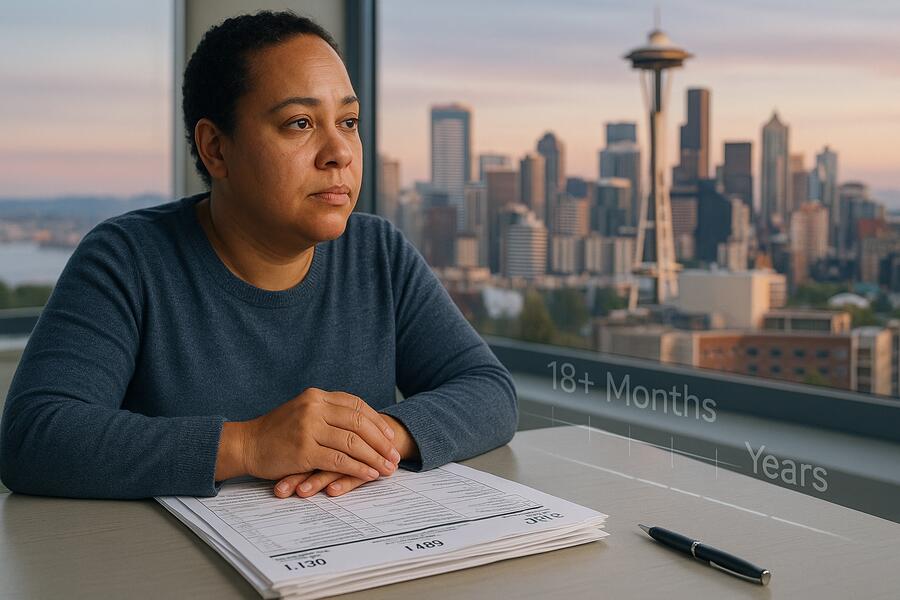
One of the most common questions we receive at Ankeny Law, both in our Seattle, WA, and Vancouver, BC, offices, is, “How long does immigration take?” The reality is, there’s no single answer to this question. U.S. immigration processing times are highly variable, influenced by a multitude of factors ranging from the specific visa or green card category to the individual service center processing your application.
Understanding these variables is crucial for anyone embarking on an immigration journey. Setting realistic expectations and preparing thoroughly can significantly alleviate stress. Whether you’re applying for a work visa, an investor visa, or a family-based petition, the immigration processing times can fluctuate. For those looking to find out more about specific legal services and how we can assist in navigating these timelines, our firm is here to help.
Understanding U.S. Immigration Processing Times
Where to Find Official Processing Times
The first step in understanding your potential visa timeline is to consult the official sources. U.S. Citizenship and Immigration Services (USCIS) regularly publishes processing times for various forms on its website. Similarly, the Department of State provides information for consular processing, and the Department of Labor for PERM labor certifications. These online tools are vital resources, but they come with nuances.
- USCIS Processing Time Tool: This tool allows you to select your form type and the service center or field office handling your case. It typically provides a range, indicating the median time (50% of cases processed) and the time it takes to process 93% of cases.
- Department of State Visa Bulletin: For immigrant visas (green cards), the Visa Bulletin dictates when a visa number becomes available based on your priority date, country of chargeability, and visa category. This can add significant wait times, especially for oversubscribed categories or countries.
💡 Key Takeaway: Always refer to official USCIS and Department of State websites for the most current processing times. These numbers are estimates and can change weekly, so consistent monitoring is advisable.
Key Factors Influencing Your Case Duration Estimates
Several critical elements can impact how long your immigration case takes. It’s rarely a straightforward path, and each case is unique:
Case Type and Complexity
Different visa and green card categories inherently have varying levels of complexity and demand. An I-130 Petition for Alien Relative, for instance, has a different processing time than an I-140 Immigrant Petition for Alien Worker or an N-400 Application for Naturalization. Simple cases with clear evidence typically move faster than those requiring extensive documentation or complex legal arguments.
Service Center and Field Office Workload
USCIS operates multiple service centers and field offices across the country. Each location can have different backlogs and staffing levels, leading to significant variations in processing times for the same form type. Your physical location or the type of petition often dictates which office will handle your case.
Requests for Evidence (RFEs)
If USCIS determines that your initial application lacks necessary information or supporting documents, they will issue a Request for Evidence (RFE). Responding to an RFE takes time, both for you to gather the evidence and for USCIS to review it, adding months to your overall case duration estimates. A well-prepared initial application is crucial to avoid this delay.
Visa Bulletin and Country Caps
For many immigrant visa categories, annual numerical limits exist, and no single country can receive more than 7% of the total available visas in a fiscal year. If you are from a country with high demand, you might face a longer wait time for your priority date to become current, even after your petition is approved.
Interviews and Background Checks
Most green card and naturalization applications require an interview at a USCIS field office or a U.S. embassy/consulate. Scheduling these interviews and completing necessary background and security checks can add several months to the process. Delays in security clearances are often a silent but significant factor.
Common Immigration Case Types and Their Timelines
To give you a general idea, here are some typical immigration processing times:
- Family-Based Green Cards (I-130 + I-485/Consular Processing): These can range from 10 months to several years, heavily depending on the petitioner’s status (U.S. Citizen vs. Permanent Resident), the relationship (spouse, child, parent), and the applicant’s country of origin due to visa bulletin backlogs. For spouses of U.S. citizens, it might be 10-24 months for Adjustment of Status.
- Employment-Based Green Cards (I-140 + I-485/Consular Processing): After PERM Labor Certification (which itself can take 8-18 months), I-140 petitions can take 6-12 months. Adjustment of Status (I-485) can add another 8-18 months, again with variations based on service center and visa availability.
- Work Visas (e.g., H-1B, L-1, O-1): I-129 petitions for non-immigrant workers generally take 2-8 months, but many offer premium processing for a 15-day decision.
- Naturalization (N-400): Applications for U.S. citizenship typically have a national median processing time of around 5.5 to 8 months, though this can vary by field office.
- Green Card Renewals (I-90): These have seen increased times, often exceeding 8 months in recent periods. It’s advised to file for renewal at least 6 months before your current card expires.
💡 Key Takeaway: Processing times are dynamic. While current estimates can offer a guide, be prepared for potential changes and delays. A comprehensive and accurate initial filing is your best defense against RFEs and prolonged waits.
Leveraging Premium Processing
For eligible employment-based petitions (like certain I-129 and I-140 categories), USCIS offers a Premium Processing Service. For an additional fee, USCIS guarantees processing within 15 calendar days (or 45 days for some specific I-140 categories). If they fail to meet this deadline, they refund the premium processing fee. This can be an invaluable option for individuals or businesses requiring a faster decision, significantly reducing their visa timeline.
It’s important to note that premium processing expedites the USCIS decision on your petition, but it does not bypass other steps like visa interviews at consulates or green card availability based on the Visa Bulletin. Therefore, while it speeds up one part of the journey, it doesn’t necessarily shorten the entire immigration process in all scenarios.
Here’s a snapshot of some common forms and their general estimated median processing times (always check official sources for the latest data):
| USCIS Form | Category | Typical Median Processing Time (Estimate) | Premium Processing Available? |
|---|---|---|---|
| I-130 | Family Petition | 10-18+ months | No |
| I-129 | Non-immigrant Worker (H-1B, L-1, O-1) | 2-8 months | Yes (15 days) |
| I-140 | Immigrant Worker Petition | 6-12 months | Yes (15 or 45 days depending on type) |
| I-485 | Adjustment of Status | 8-18+ months | No |
| N-400 | Naturalization | 5.5-8 months | No |
| I-90 | Green Card Renewal | 8+ months | No |
💡 Key Takeaway: While premium processing can accelerate certain petitions, it’s not a universal solution. Understand which parts of your immigration journey can be expedited and plan accordingly.
The immigration process can be a lengthy and often unpredictable journey. Setting realistic expectations, meticulously preparing your application, and understanding the variables at play are paramount. At Ankeny Law in Seattle, WA, we specialize in helping individuals and families navigate these complexities. Our experienced team is dedicated to providing clear, practical advice, ensuring your application is as strong as possible to minimize delays and maximize your chances of success.
Processing time is one part of a larger picture for companies managing immigration across several employees or locations. Our guide to what global mobility means and why it matters covers that wider context.
Frequently Asked Questions About Immigration Processing
How can I check my specific immigration case status?
You can check your case status online using the USCIS Case Status Online tool. You’ll need the 13-character receipt number from the notices USCIS sent you. This tool provides updates on significant actions taken on your case. For consular processing, you can check the status through the Department of State’s CEAC (Consular Electronic Application Center) website.
What if my case is taking longer than the posted processing times?
If your case falls outside the normal processing time range published by USCIS for your specific form and service center, you may be eligible to submit an “outside normal processing time” service request. You can do this online or by calling the USCIS Contact Center. It’s advisable to consult with an immigration attorney before making such a request, as they can assess if it’s the right step for your situation.
Does getting an RFE (Request for Evidence) mean my case will be denied?
No, an RFE does not mean your case will be denied. It simply means USCIS requires more information or documentation to make a decision on your application. It’s an opportunity to provide the requested evidence. Responding thoroughly and accurately to an RFE is critical. Failure to respond or submitting an incomplete response can lead to a denial.
Can I travel internationally while my green card application (I-485) is pending?
If you have a pending I-485 Adjustment of Status application, traveling internationally without an Advance Parole document can be considered abandonment of your application, leading to its denial. It is absolutely crucial to obtain Advance Parole before any international travel while your I-485 is pending. Consult with your attorney before planning any travel.
Navigating the intricacies of U.S. immigration law and its often-extended case duration estimates requires expertise and diligent preparation. At Ankeny Law, with our offices in Seattle, WA, and Vancouver, BC, we are committed to providing comprehensive legal support for all your immigration needs. Our goal is to make your immigration journey as smooth and efficient as possible, providing clarity amidst the complexities. Contact us for personalized guidance and dedicated representation.